
Mako - Live Streams&Chat
MatchU TeamSocial
3.160.00 Reviews
- Version
- 2.3.3
- Installs
- 10.00M
- Age Rating
- Mature 17+
Screenshots

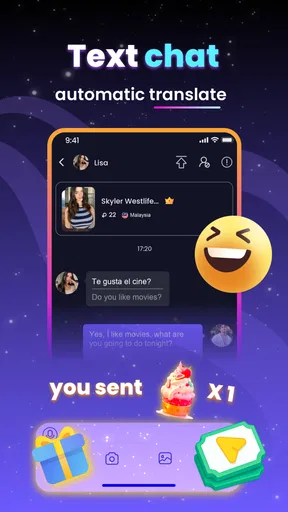
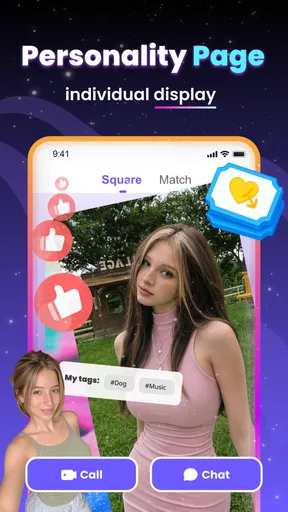

Our Review of Mako - Live Streams&Chat
 Analysis by Appyee
I opened Mako - Live Streams&Chat expecting a quick social app and found something better understood as a meeting place built around live interaction. Its basic idea is simple: connect with people through video, chat, and play rather than relying only on delayed messages. That changes the rhythm of communication. Instead of writing a careful message and waiting, you are encouraged to react while something is happening.
That immediacy is the app’s main attraction, but it is also where most of the judgment is needed. Live social spaces can feel warmer than ordinary feeds, yet they can also demand more attention than I planned to give. My experience with Mako was strongest when I treated it as a short social visit rather than an app to keep open all day.
It is a free social app from MatchU Team, intended for mature users aged seventeen and above. The app has passed ten million installs, carries an average rating of 3.1 from roughly sixteen thousand ratings, and includes optional purchases ranging from $0.99 to $199.99 per item. Those figures suggest a sizeable audience, but they also tell me to approach it with realistic expectations: Mako is popular enough to have an active social environment, while the middling rating indicates that the experience will not suit everyone.
How Mako changes the way people connect
I see Mako’s defining shift as moving social contact from messages you can answer later to live interaction that asks you to be present now. That can make meeting someone feel less like trading introductions and more like sharing a small moment. The useful question is not simply whether live video appeals to you, but whether you want that immediacy often enough to accept its demands on your attention.
From messages to shared moments
Traditional chat is forgiving. I can answer when I have time, edit my words, and leave a conversation without making my departure visible. Mako’s live format works differently. Video connections create a stronger sense of presence, and the combination of chat and play gives conversations something to do besides exchange questions. That makes the app appealing when a plain messaging thread has started to feel repetitive.
I found the difference especially noticeable when meeting someone new. In a normal text conversation, both people may spend several messages trying to find a subject. A live setting can provide an immediate focus: react to what is happening, comment on the atmosphere, or take part in the available social activity. The result is less formal and often more spontaneous.
That does not mean every interaction becomes meaningful. Live communication can be lively without being clear. A fast exchange may create the feeling of connection while leaving little room for thoughtful discussion. I would use Mako for casual contact, meeting people with similar interests, and breaking up a quiet evening. I would not choose it for an important conversation that needs careful wording or a reliable written record.
Who is likely to enjoy the format
Mako suits people who get energy from immediate reactions. If you enjoy joining a room, seeing how others respond, and deciding in the moment whether to participate, the format has a natural appeal. It can also help users who find one-to-one messaging awkward because the live setting supplies a shared context.
It is less suitable for someone who prefers controlled communication. If you dislike appearing on camera, need time to think before replying, or want a social app that can remain quietly in the background, the live approach may feel demanding. The mature age rating is also important. I would not treat this as a general family chat app or hand it to younger users simply because the download itself is free.
A realistic everyday session
Imagine finishing work or classes and wanting contact without arranging a formal call. With Mako, I would open it with a specific intention: spend fifteen minutes exploring live conversations, join only when the setting feels comfortable, and leave when that goal is met. That small decision matters because live apps can turn “I will look for a minute” into a much longer visit.
In that situation, the app works as a low-planning social option. I do not need to coordinate a time with a friend first, and I can move between observing, chatting, and playing. If a conversation feels forced, I can stop participating rather than trying to rescue it through a long message thread. The trade-off is that the quality of the visit depends heavily on who is available and how well the live environment matches my mood.
The first-use learning curve
The current version is 2.3.3, and it supports devices running Android 7.0 or later. That makes it accessible to people using older Android hardware, although accessibility on paper is not the same as a smooth experience on every phone. Live video naturally makes performance, connection quality, and battery use more noticeable than they would be in a text-only app.
My practical advice is to spend the first session observing the layout and the pace before actively joining conversations. Do not rush to share personal details simply because the format feels friendly. A live room can create familiarity quickly, but familiarity is not the same as trust. I would also check how comfortable I am with the amount of attention the app requests before deciding whether it deserves a regular place on my phone.
Conversation flow: where the app feels natural
The strongest part of Mako is the movement between different levels of participation. A user does not have to treat every interaction as a serious conversation. Watching for a while, responding in chat, and then joining more directly creates a gradual path into social contact. That is more flexible than a conventional video call, where accepting the call usually means committing immediately.
The chat-and-play combination also changes the pressure on conversation. When two people are focused on an activity, silence is less uncomfortable. A shared action can carry part of the interaction, which is useful for people who do not enjoy constant small talk. I see this as one of the app’s more practical strengths, even though it may not appeal to users who want a quiet, private exchange.
There is a subtle downside. Activities can keep an interaction moving without helping people understand one another. If I wanted to judge whether someone was genuinely compatible as a friend, I would not rely only on how entertaining a live session felt. I would look for consistency across multiple conversations and pay attention to whether the other person respects pauses, disagreement, and a clear goodbye.
Keeping conversations clear
Live communication rewards short, direct responses. That can make Mako feel easier than writing long messages, but it also leaves more room for misunderstanding. Tone is difficult to read even with video, and a quick reaction may be interpreted differently from how it was intended. I found it helpful to say what I mean plainly rather than assuming the other person understood a joke or a sudden change of subject.
For practical coordination, I would still use an ordinary messenger. Mako is better at creating a moment than documenting one. If a conversation involves an address, a schedule, or an agreement I may need later, I would confirm the important details in writing elsewhere. This is not a criticism of the app’s purpose; it is simply the difference between a live social space and a dependable record.
Attention is the hidden cost
The app’s live design can make time feel less visible. A text conversation usually gives me natural gaps in which to put the phone down. A live exchange encourages continuous presence, because leaving may feel like interrupting the moment. That makes the experience engaging, but it can also fragment an evening that was supposed to be restful.
I noticed three kinds of attention cost. First, there is the time spent actively watching or responding. Second, there is the mental effort of deciding whether to join, stay, or leave. Third, there is the after-effect: checking again because I wonder whether a new interaction is happening. These costs are easy to overlook because none of them feels like a formal task.
My best workaround is to define the purpose of opening Mako before launching it. Am I looking for conversation, a brief distraction, or a particular person? A clear answer makes it easier to close the app when the purpose has been met. Without that boundary, the endless possibility of a better conversation can become more compelling than the conversation I am already having.
Live video and personal energy
Video adds emotional information, but it also asks more from the user. With text, I can participate while tired, distracted, or in a noisy place. With live video, my surroundings and appearance may become part of the interaction. Even when nobody explicitly asks for attention, I may feel pressure to remain responsive and present.
For that reason, I would use Mako differently at different times of day. During a short break, I might prefer observing or chatting rather than committing to a full live exchange. When I have more energy, the video format can feel rewarding. When I am already overloaded, a quieter messaging app is the healthier choice.
This is also where the mature rating deserves more than a passing mention. Adults should still apply ordinary online judgment: avoid sharing identifying information too quickly, be cautious with requests involving money or private images, and leave interactions that become uncomfortable. The social design can make people feel close before they have earned confidence.
Boundaries are part of the experience
I consider the ability to leave cleanly one of the most important tests for any live social app. Mako is most comfortable when I remember that participation is optional. I do not owe a stranger a long explanation for ending a conversation, and I do not need to remain because the other person seems disappointed.
A useful habit is to decide in advance what I will not discuss. That might include my exact location, workplace details, private contact information, or financial matters. Setting those limits before a friendly conversation begins is easier than trying to invent them under pressure. Live interaction moves quickly, so preparation is more effective than relying on perfect judgment in the moment.
I would also separate social curiosity from genuine interest. Someone can be entertaining without being trustworthy, and a warm conversation can still contain requests I should decline. Mako makes spontaneous contact easy; it does not remove the need to evaluate the person on the other side of the screen.
Free access and purchase pressure
Mako is free to install, which lowers the barrier to trying it. However, optional purchases run from $0.99 to $199.99 per item. That is a wide range, so I would be careful about treating paid items as part of ordinary social participation. Before buying anything, I would ask whether it improves the actual kind of connection I want or merely encourages me to stay longer and spend more.
My approach would be to use the free experience first and observe whether the app is valuable without spending. If the social environment does not feel comfortable or worthwhile at that stage, purchases are unlikely to solve the underlying problem. I would also avoid making a payment during an emotionally exciting live interaction, when enthusiasm can make a virtual item seem more important than it is.
Where it stands beside familiar alternatives
Compared with ordinary messaging apps, Mako offers more immediacy and less planning. Its advantage is the feeling of being present with other people, while its disadvantage is the greater demand for attention. Messaging remains better when I need privacy, precision, asynchronous replies, or a conversation that can be revisited later.
Compared with a scheduled video call, Mako is more spontaneous and less dependent on coordinating with people I already know. A call is usually more predictable and focused, while Mako is better for discovery and casual interaction. If my goal is a dependable conversation with a close friend, I would choose the call. If I want to browse social possibilities and participate when something catches my interest, Mako has the stronger fit.
Compared with a conventional social feed, the app places more weight on live presence and less on carefully edited posts. That can make interaction feel more human, but it also reduces the distance that normally gives me time to reflect. Users who enjoy polished profiles and slow discovery may prefer a feed-based service. Users who are tired of passive scrolling may appreciate Mako’s more active rhythm.
Small habits that improve the experience
I would begin by using a short session limit, not because every visit must be brief, but because live apps make stopping harder once I am engaged. I would then spend a little time observing before joining. This gives me a sense of the conversation’s tone and helps me avoid entering a space that does not match what I want.
My second habit would be to keep important conversations separate from entertainment. If someone becomes a genuine friend, I would still avoid assuming that the live connection is enough for every kind of communication. Clear written follow-up, slower conversations, and time away from the app can reveal whether the relationship works beyond the excitement of the moment.
Third, I would treat purchases as a deliberate decision rather than a social obligation. The presence of paid items should never determine whether I feel welcome. If an interaction makes me uncomfortable because I am not spending, I would regard that as a reason to leave, not a reason to buy.
My social verdict
Mako is a distinctive choice for adults who want live video connections, chat, and playful interaction in one social setting. I like the way it lowers the planning required to meet people and gives conversations a shared activity. It can be more engaging than a silent feed and more flexible than arranging a video call.
At the same time, the app changes communication from something I can answer at my own pace into something that asks for presence. That affects attention, privacy, and emotional energy. The average rating of 3.1 reflects a product with genuine appeal but uneven suitability, and I think that is a fair way to approach it: interesting, active, and worth trying, but not automatically the best social tool for every person.
My recommendation is to try Mako as a bounded social visit, not as a permanent background habit. It is a good fit if you enjoy spontaneous live contact and can maintain clear limits. I would skip it if you want quiet messaging, strong control over your availability, or a space designed mainly for close friends. Used with those distinctions in mind, Mako can make communication feel more immediate without having to take over the rest of your day.
Verdict
Strengths of Mako - Live Streams&Chat
- Live streams are easy to discover through categories and recommendations.
- Real-time chat makes it simple to interact with streamers and viewers.
- Supports casual entertainment, gaming, and social content in one app.
- Notifications can help you catch broadcasts from followed creators.
- The interface is generally straightforward for first-time users.
Limitations of Mako - Live Streams&Chat
- Stream quality can vary considerably depending on the creator’s connection.
- Busy chats may become difficult to follow during popular broadcasts.
- Some content or features may require in-app purchases or gifts.
- Frequent notifications can feel excessive unless notification settings are adjusted.
- Privacy-conscious users may dislike the amount of social interaction required.
Similar Picks in This Category
View All
Meta Platforms, Inc.4.6

Instagram4.0

Likee-Live, Chat & Party Games
Likeme Pte. Ltd.4.4

Facebook Lite
Meta Platforms, Inc.4.5

TikTok - Videos, Shop & LIVE
TikTok Pte. Ltd.4.0

Moj: Free Short Drama & Reels
ShareChat4.1
Frequently Asked Questions
What is Mako - Live Streams&Chat, and what can I do with it?
Mako - Live Streams&Chat is a social entertainment app focused on watching live broadcasts and interacting with streamers and other viewers. Depending on the available channels, you can discover live content, send messages in chat, follow creators, and participate in an active community. The experience is designed for real-time interaction rather than simply watching recorded videos.
Is Mako - Live Streams&Chat free to download and use?
The app may be free to download, but some features or digital items can require payment. Live-streaming platforms commonly offer optional virtual gifts, premium interactions, subscriptions, or other in-app purchases. Before spending money, check the current pricing shown in the app store and review the purchase confirmation carefully. Availability and costs may vary by country, device, and account.
Do I need to create an account to watch live streams?
You may be able to browse or watch some content without registering, but an account is generally needed for interactive features such as chatting, following streamers, sending gifts, or customizing your profile. Registration can also help synchronize preferences across sessions. When signing up, use a strong password and avoid sharing personal information publicly through your profile or live chat.
Is Mako - Live Streams&Chat safe for children and teenagers?
Parents should review the app carefully before allowing children or teenagers to use it. Live broadcasts and public chat can include unpredictable conversations, mature themes, commercial content, or contact from strangers. Use any available privacy, blocking, reporting, and parental-control tools, and discuss responsible online behavior. The appropriate age rating and content availability should also be checked in your local app store.
What should I do if I encounter inappropriate content or abusive users?
If a stream or chat contains harassment, scams, sexual material, hate speech, or other inappropriate behavior, avoid responding or sharing personal details. Use the app’s report and block options whenever available, and save relevant information such as the username or stream title if you need to explain the issue. For serious threats or suspected fraud, contact the platform and appropriate local authorities.
